Paralympics 2021 LIVE updates Clifford back on track Rollers take on GB Cole eyes gold
1 of 2
We mentioned the Belles a little earlier, and how their hopes of reaching the Paralympic goalball quarter-finals for the first time hinged upon today’s clash between China and Canada.
Well, China has just beaten Canada 4-2 - which means Australia are into the final eight. That’s history, right there.
The quarter-finals are all on Wednesday, with the medals to be handed out on Friday. We’ll find out soon who Australia’s opponents will be.
There are 4,403 Paralympic athletes competing in Tokyo, each with unique differences that have to be classified. Lines have to be drawn â€" in the quest for fairness â€" to group similar impairments, or impairments that yield similar results.
It’s a confusing maze. And make no mistake, the Paralympics are competitive and athletes are aware that no matter where a classification line is drawn, some are likely to benefit more than others.
Winning leads to gold medals, sponsorship deals, and other outside funding. And some teams are even known to recruit athletes in that top range, and often younger athletes.
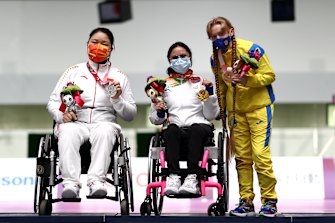
Ukraine’s Iryna Shchetnik, India’s Avani Lekhara, and China’s Cuiping Zhang pose with their medals from the women’s 10m AR standing SH1 event.Credit:Getty
Able-bodied athletes have advantages in certain sports, and athletes with disabilities are not entirely different.
There are 10 impairment groups in the Paralympics: eight involve physical impairments, and the other groupings are for visual and intellectual impairments. But the 22 Paralympic sports adjust the groups to suit their sport, swelling the classifications. Some athletes say they’re not always fair.
The International Paralympic Committee has just begun a periodic review of the classification system, but changes are unlikely until after the 2024 Paralympics in Paris, spokesman Craig Spence said.
At a quick glance, the current classifications system is hard to digest. For instance, the finals in swimming on Saturday â€" each has a men’s and women’s race â€" include: 100-meter breaststroke, SB6 class; 100 freestyle, S10; 150 individual medley, SM4; 150 individual medley, SM3; 100 backstroke, S11; 200 individual medley, SM8; and 100 breaststroke, SB5.
Most athletes agree there must be classes, but they still may dispute the logic or science behind them.
The largest classification disputes involve athletes with “loss of function†â€" spinal cord injuries, spina bifida, and cerebral palsy â€" rather than physical impairments like missing limbs of physical deformities.
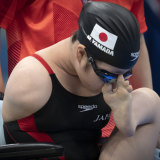
Japan’s Miyuki Yamada, who was born without arms, competed against athletes with arms - and still won a medal.Credit:AP
There tend to be fewer disputes over visible impairments, like the loss of a limb. Coordination impairment from something like cerebral palsy tends to be questioned more.
But the eye deceives. Japanese swimmer Miyuki Yamada won a silver medal this week in the 100-meter backstroke, S2 class. She is 14 and was born without arms. It seemed unfair to see her race against swimmers with arms, and yet she won a medal.
Clearly, other swimmers had disabilities that were more difficult to spot.
Heinrich Popow, a two-time gold medalist in track and field who is retired and not competing in Tokyo, said the Paralympics might be reaching a crossroads. This could involve excluding athletes.
“The most important thing for us in the future is to clarity the question: Are we going to go for being a more professional sport, or are we going more for being a motivational sport for the society?†Popow asked.
“If we go more to the professional side, we won’t talk so much about inclusion because it will be exclusion. We have marks to be set. Athletes have to fulfil higher levels to attend the Paralympics.â€
AP
Olympic gold medal winner and AFLW star Chloe Dalton has taken up the equal prizemoney fight for Olympians and Paralympians, setting up a fundraising page for Australian para-athletes currently in Tokyo.
Dalton, like many Australians on social media recently, says she was shocked to learn that Australia’s Olympic gold medal winners received $20,000 from the Australian Olympic Committee, but Paralympic gold medal winners won no money from Paralympics Australia.
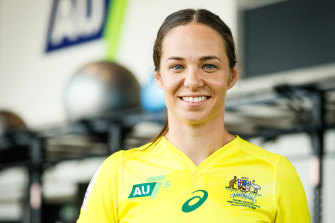
Chloe Dalton missed the Tokyo Olympics due to injury but won gold in Rio. Credit:Getty Images
It’s the same for silver medals and bronze medals, with Olympic place-getters taking $15,000 and $10,000 respectively, but nothing for Paralympic medal winners.
Dalton, the GWS player and rugby sevens gold medallist from Rio, has raised close to $12,000 in under a day on her fundraising page, with a $100,000 goal. The money will be split evenly among Australia’s medal winners at the Paralympic Games in Tokyo.
Read Anthony Colangelo’s full story here.
It feels like after we got through the Olympics without major incident, COVID-19 is a lot less of an issue at the Paralympics.
But the pandemic continues to rage on, with 11 new cases reported today inside the Paralympic bubble. In total, there have been 241 since August 12, when the bubble began.
There have also been 25 cases of heat-related illness in the five days to August 28, although none were deemed to be serious.
Overall, thought, things seem to be going pretty smoothly for event organisers.
“So far, there have been no problems having a major impact on the operation of the games,†said Toshiro Muto, the CEO of the committee which is organising the Tokyo Olympics and Paralympics, at a press conference this morning.
Australia has three swimmers in finals this evening in the pool, plus a relay to finish up. Tim Hodge and Brendan Hall will battle it out in the men’s 100m backstroke final (S9), which kicks off at 6.14pm AEST.
Although heat times should never be a definitive guide, Hodge was the third fastest qualifier (1:02.81), while Hall will start in lane one after clocking a time of 1:05.78 in the heats.
Then we have four-time Paralympian Ellie Cole aiming to win medal No.17.
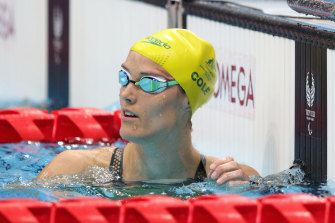
Ellie Cole has a shot at medal No.17 tonight.Credit:Getty
Yes, 17.
She will start in lane six for the S9 100m backstroke event, having qualified fourth fastest in a time of 1:13.50, more than three seconds adrift of American Hannah Aspden.
The final event of the night is the men’s 4x100 freestyle relay (34 points). Australia are the third fastest from the heats (3:49.79), behind Italy (3:46.06) and Ukraine (3:48.83).
But in relays, as we know, anything can happen.
Australia hasn’t won a gold medal in the pool since a brilliant opening night on Wednesday, when the team claimed four golds.
...just take it from Dylan Alcott, who faces the USA’s Bryan Barten in his quad singles quarter-final tonight. And it’ll probably be pretty late.
As we continue counting down until the Rollers play later tonight, it’s worth bringing you up to speed on the Gliders - Australia’s women’s wheelchair basketball team.
They did not qualify for Rio 2016 and have struggled to put together any meaningful preparation before Tokyo because of the pandemic.
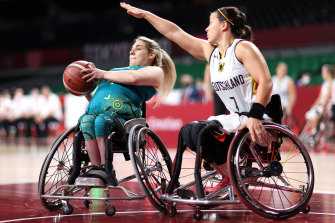
Sarah Vinci of Team Australia and Anne Patzwald of Team Germany compete earlier in the tournament.Credit:Getty
The Gliders finished the group stage without a win after losing 76-37 to Canada on Sunday. But they’ll battle Algeria on Tuesday in the playoff for ninth place.
“It’s definitely been a struggle. We’ve had to play against men’s teams and they tend to play a bit differently so it’s not the same as playing internationally,†captain Georgia Munro-Cook, who is one of 10 first-time basketball Paralympians in the Australian team, told the Paralympics Australia website.
“Being so isolated, and even with all the different state restrictions, not being able to be together as a team has made it quite difficult.â€
Four minutes 40 seconds and change. That is the time marker, the destination, the magnet drawing American Morgan Stickney ever closer.
For more than a year, Stickney has trained diligently in a pool in Cary, North Carolina, slicing off seconds in her relentless pursuit of those prized numbers on a digital clock.
“That’s the goal,†Stickney said. “I’m going after it.â€
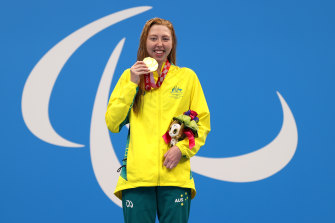
Lakeisha Patterson after her S9 400m freestyle win. Credit:Getty
The precise figure is 4:40.33 and it belongs to Lakeisha Patterson, who swam it in the 400-meter freestyle in the S8 classification at the Rio Paralympics in 2016. Patterson’s time is the current world record. It is Stickney’s irrepressible ambition to pass it.
She is a little more than three seconds off that pace. But she is getting closer. Over the past year or so, Stickney has lowered her best time by almost half a minute, a remarkable achievement, especially for a swimmer who only recently became a double amputee.
Less than two years ago, few could have foreseen Stickney being in a position to even swim competitively again. Now, she might win a medal at the Paralympics in Tokyo.
Morgan Stickney.Credit:Getty
At 14 she ranked in the top 20 in the country as an able-bodied distance swimmer, and set a goal of competing in the 2020 Olympics. But a broken bone in her foot and a medical condition that prevents adequate blood circulation to her limbs led to years of intense pain and an addiction to opioids to mitigate the agony. Finally, in 2018, when she was 20, she agreed to have her lower left leg amputated.
After the surgery, Stickney returned home to Bedford, New Hampshire, ditched the painkillers and recalibrated her life. She learned how to get around on one foot, jumped into the pool again and switched her event to the 400 meters. In almost no time, her performances were good enough that she was invited to train at the U.S. Olympic and Paralympic headquarters in Colorado Springs, Colorado.
But then the same condition attacked her right leg, and doctors performed a second amputation below the knee in October 2019. Once again, Stickney went back to work, first learning how to sit up in bed, then to get in and out of a wheelchair, then how to walk on two prosthetic limbs. A few months later, she dove back into the pool again, this time with no lower legs, but still determined to compete at the highest level.
“I don’t know how many people would put in the amount of work that I have,†Stickney said. “A lot of people might think it has to do with talent. Honestly, it’s pure hard work that got me where I am today.â€
New York Times
Just a reminder - we are still four hours away from our next event in Tokyo that involves any Australians.
That’s at 6.15pm, when the Rollers - our wheelchair basketball team - take on Great Britain in their final Group B match.
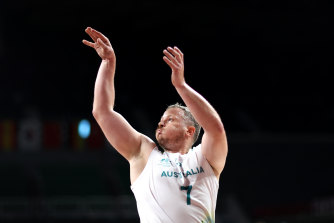
Shaun Norris and the Rollers are back in court in around four hours.Credit:Getty
Yesterday was tough for the Rollers. They copped their first defeat of the Paralympics, a brutal 66-38 loss to the reigning Paralympic champions USA.
Great Britain are the only team to have beaten the Americans so far at this tournament - they won 64-63 on Saturday - so they will be expecting another difficult assignment.
About 100 prosthetists are on hand to make repairs, and provide adjustments and maintenance for artificial limbs and other orthotic devices for athletes participating in the Tokyo Paralympics - free of charge and with millimetre-level precision.
“I want to do my best to help the athletes reach their full potential,†said Masakatsu Nakashima, 32, a prosthetist from Kitakami, Iwate Prefecture, who was dispatched to the event for the first time.
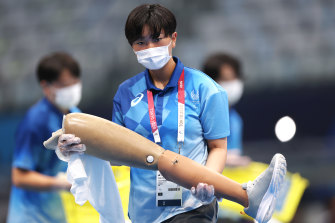
A field of play team member holds a Prosthetic leg before a race on Monday.Credit:Getty
The repair service centre at the Olympic Village and repair booths at venues have been operated by Ottobock SE & Co., a German medical and welfare equipment maker, since the 1988 Seoul Games. From Japan, 14 prosthetists are joining the team at the Tokyo Games.
Nakashima was assigned to the Games team from P.O. Innovation, based in Hanamaki, Iwate Prefecture, a prosthetic device manufacturing and sales company where he works, as he can repair all types of prosthetic legs, orthotics and wheelchairs.
Making and maintaining a prosthetic limb is a process of communicating with the user and making sure that the user is truly satisfied. In the Paralympic Games, detailed adjustments are required until the athletes are satisfied.
“There is only a limited amount of time for the Games, and there may be (prosthetic or orthotic) parts they have never seen before. They have to communicate in a foreign language. There will be many hardships, but I hope they will gain experience through hard work,†said Taro Kenmoku, the president of P.O. Innovation.
“I feel a lot of pressure because prosthetic devices can affect the athletes’ whole careers,†Nakashima said.
But he intends to carry on as usual in a natural manner.
“I want to give back to the ordinary users in Iwate Prefecture what I have learned from the Paralympics,†he said.
Washington Post
1 of 2
0 Response to "Paralympics 2021 LIVE updates Clifford back on track Rollers take on GB Cole eyes gold"
Post a Comment